Church of PeptidesSearch
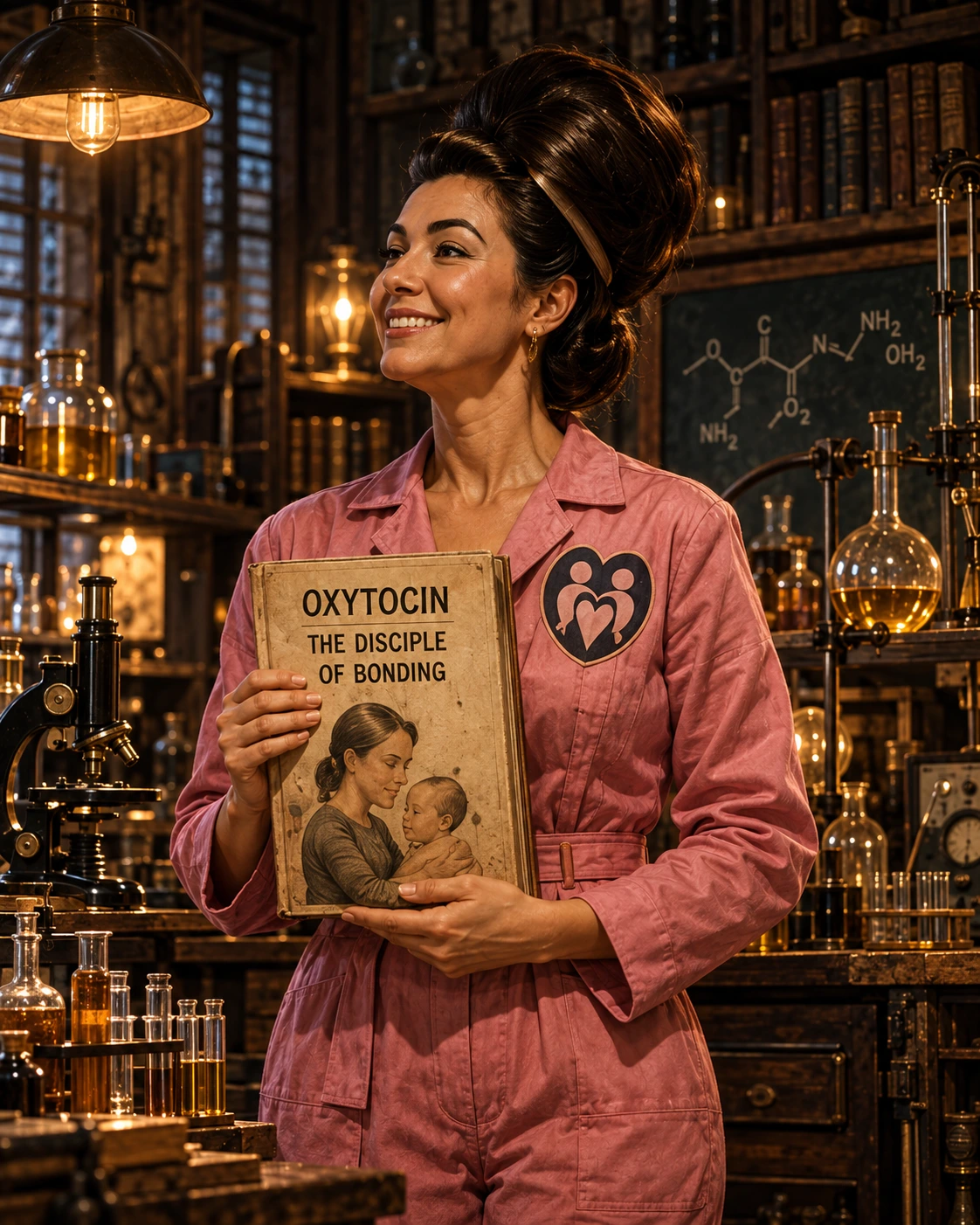
Oxytocin, the fictional woman in pink with a dark updo and her bonding book
Original Disciple I · Established endogenous hormone

Oxytocin

The Disciple of Bonding

New York, United States · isolated 1949 · synthesized 1953

Oxytocin is a hormone involved in uterine contractions and milk ejection. Its role in social behavior helped earn it the nickname “love hormone,” but that nickname oversimplifies the science. Medical oxytocin has specific obstetric uses that require clinical supervision.

Evidence ladder: Approved human useEstablished biology · indication-specific medicineEducational record
ClassificationOriginal Disciples
Evidence summaryEstablished biology · indication-specific medicine
OriginNew York, United States · isolated 1949 · synthesized 1953
Scientific record

What the evidence says

Roles or demonstrated benefits

  • In the body, drives uterine contractions during labor.
  • Supports milk ejection during breastfeeding.
  • Approved medical products have specific obstetric uses under clinical supervision.

Risks, side effects, and limits

  • Administered oxytocin can cause excessive uterine activity and fetal distress.
  • Large or prolonged exposure can contribute to water intoxication and electrolyte disturbance.
  • Social behavior is complex; “the love hormone” is not a clinical indication.
Doctide’s verdict

The bonding nickname is memorable, but contractions and milk ejection are the firmer scientific foundation. Honor the hormone’s real achievements without turning its social reputation into a promise of better relationships.

Documented history

Where the story actually begins

Vincent du Vigneaud’s team at Cornell isolated oxytocin in 1949 and announced its synthesis in 1953. Making a biologically active hormone in the laboratory was a landmark in peptide chemistry. Cornell’s historical account describes the work and its connection to his 1955 Nobel Prize.

New York, United States · isolated 1949 · synthesized 1953
Book of the Canon · Comic scripture

The laboratory legend

Oxytocin found six brilliant people working in six separate corners. She moved every chair into one circle, warmed the coffee, and by dawn everyone was sharing data they had planned to hoard forever.

This bold passage is invented comedy, not scientific or historical fact.
Editorial recordProfile editorial revision: October 4, 2026Prepared under the Church of Peptides evidence standardEditorial review: Church of PeptidesIndependent clinical review: none to dateContent evidence reviewed: September 12, 2026
Evidence ledger

Sources

  1. Weill Cornell history
  2. Nobel Prize biography
  3. FDA Drugs@FDA
  4. DailyMed: Pitocin prescribing information

Fiction disclosure: The bold laboratory legend above is invented. The historical and scientific sections are intended as sourced summaries; no invented connective events were added to the documented history.

Educational entertainment only. Not medical advice, diagnosis, dosing guidance, or a recommendation to obtain or use a product.